

Morton's neuroma
Electric shocks or a pebble feeling between the toes? Diagnosis and...



Electric shocks or a pebble feeling between the toes? Diagnosis and...

Pain under the ball of the foot when walking? From insoles to surgery...

Heel pain with your first steps? Ultrasound-guided injections and...

Morton’s neuroma or metatarsalgia, injections, the day of the...

Travelling from London, Geneva or Berlin? Examination and ultrasound in...

Online booking for a foot and ankle consultation at the practice in...
I am an orthopaedic and trauma surgeon and a former resident of the Paris Hospitals (Interne des Hôpitaux de Paris). I specialise in adult foot and ankle surgery and use ultrasound every day to diagnose, to inject and, when needed, to operate through a minimally invasive approach.
I see patients at my practice in Versailles, in the Yvelines. They come from the west of Paris, the capital itself and the surrounding départements.
Electric shocks in the toes, the feeling of a pebble or a folded sock under the forefoot, pain that eases when you take your shoe off: these symptoms point to a nerve compressed between two metatarsal heads.
Morton's neuroma: symptoms, diagnosis and treatment
Pain under the ball of the foot when walking, painful hard skin or a burning sensation under the pads of the foot usually reflect excess pressure on the metatarsal heads.
Metatarsalgia: causes and treatment options
Heel pain with the first steps in the morning, or after sitting down for a while, is the classic sign of plantar fasciitis: wear of the fascia where it attaches to the heel bone.
Plantar fasciitis: from insoles to ultrasound-guided treatment
I also treat Achilles tendinopathy, tarsal tunnel syndrome, chronic exertional compartment syndrome of the leg and iliotibial band syndrome (ITBS), as well as the sprains, tendon injuries and muscle injuries seen in sports traumatology.
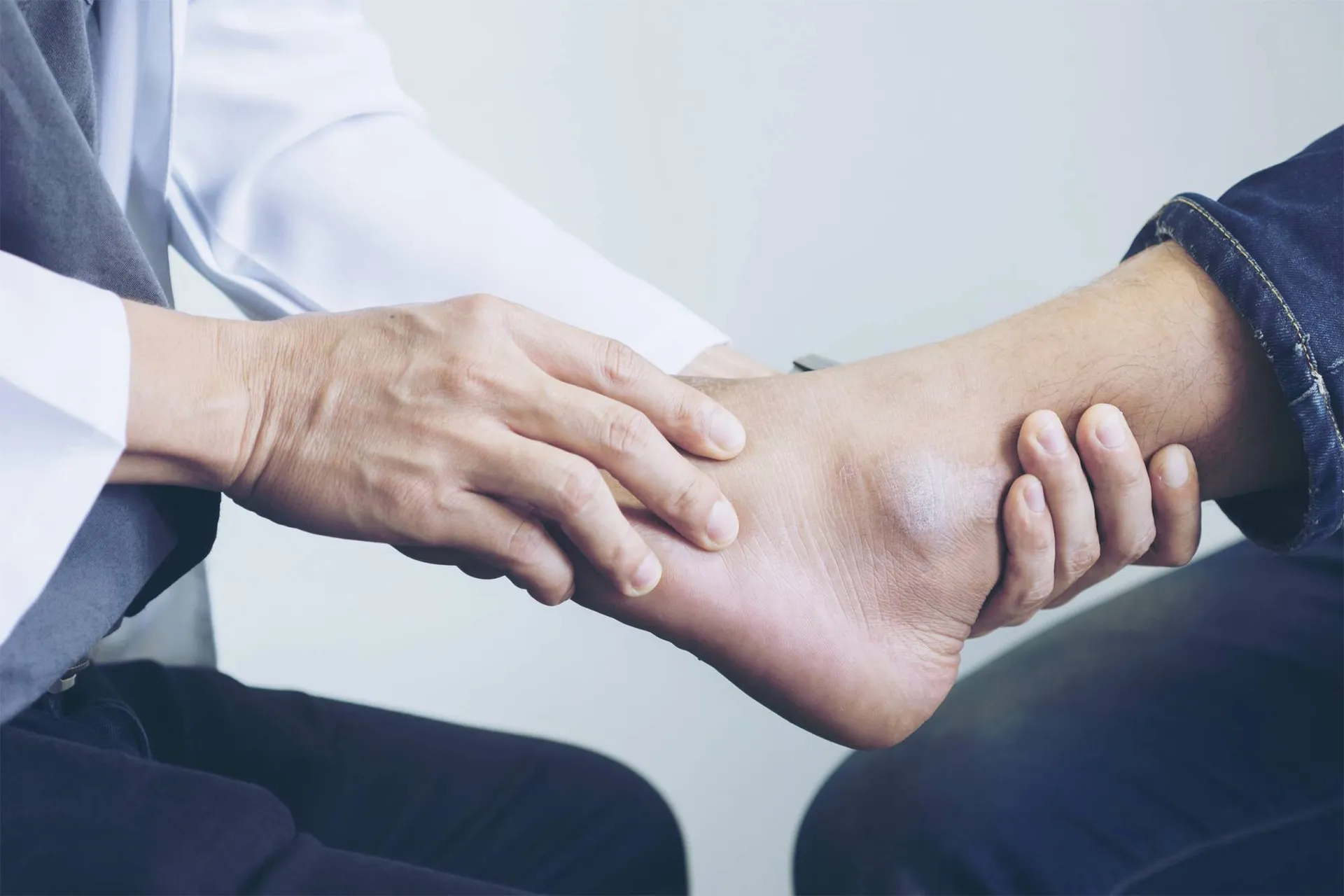
To have your foot pain assessed, book a consultation in Versailles via Doctolib online booking for Dr Lionel Benamran or through the contact form of the practice.
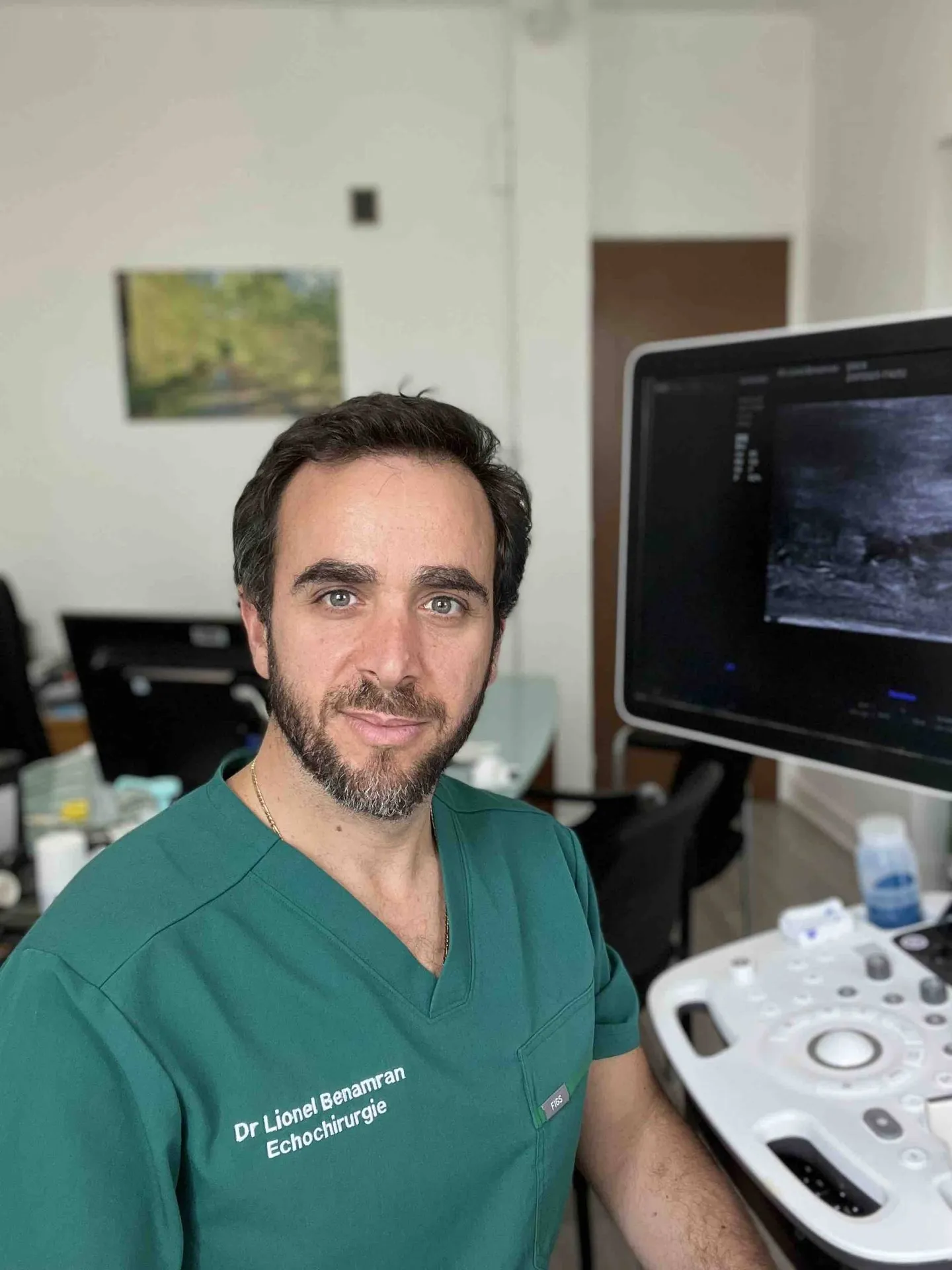
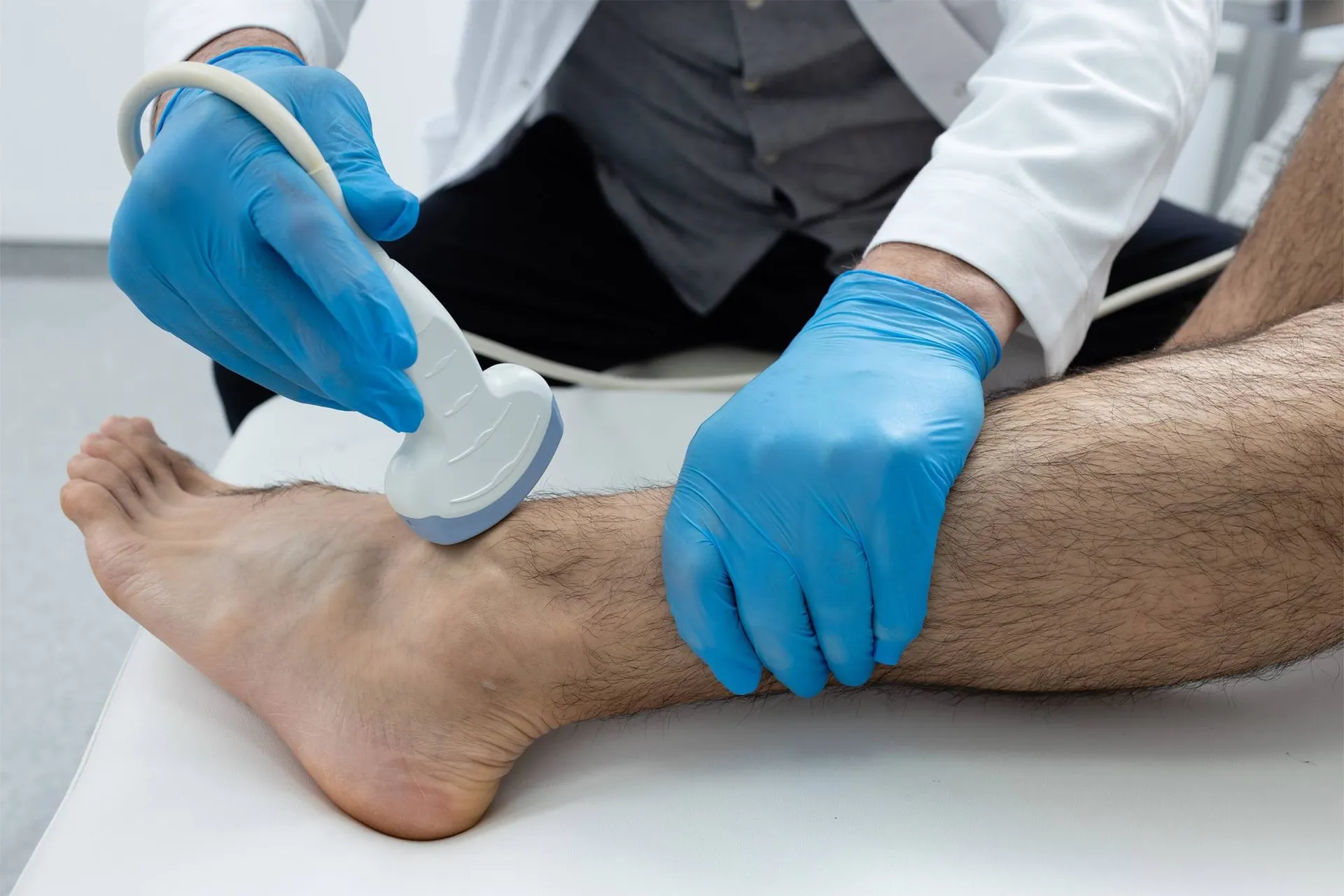
Ultrasound lets me examine your foot in real time, while you move it. Tendons, ligaments, nerves and the plantar fascia become visible during the consultation itself. Imaging is done on the spot, and an ultrasound-guided injection can follow straight away when it is indicated, with no extra appointment and no waiting.
For selected conditions, I operate under ultrasound guidance through a needle-sized opening of 1–2 mm. The procedure takes place in the consulting room, under local anaesthesia, as office-based surgery:
Surgery is only considered once well-conducted conservative treatment (footwear, orthotic insoles, stretching, injections) has not brought lasting relief. Minimally invasive does not mean risk-free: infection, haematoma or nerve injury remain possible, although rare, and we go through them together before any decision.
In other procedures, ultrasound reduces the size of the scar and the risk of infection, and makes each step more precise through real-time guidance. In children, for example, ultrasound-guided fracture reduction limits exposure to X-rays and lets me check the reduction before the cast is applied, during the consultation.
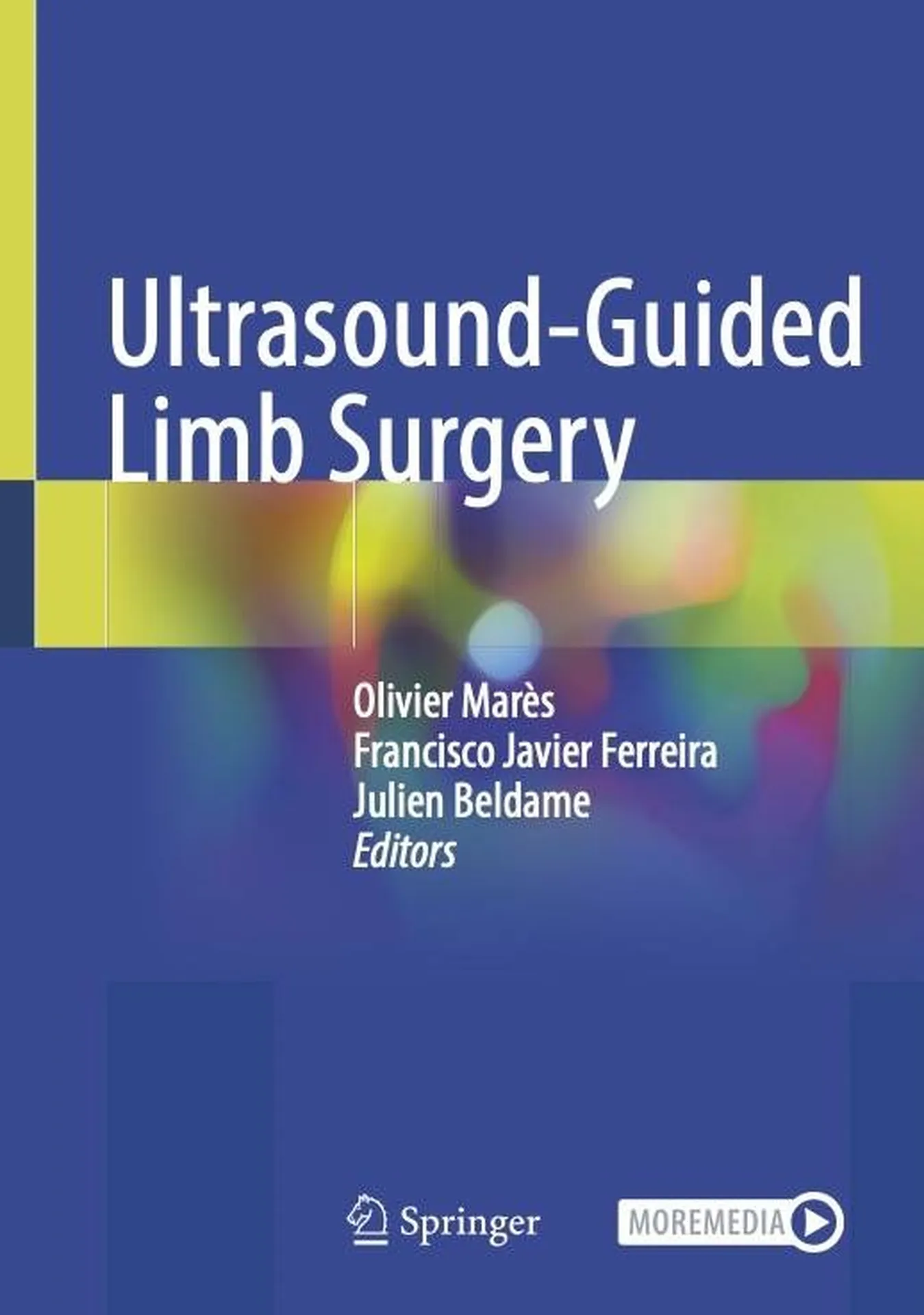
I am a co-author of Ultrasound-Guided Limb Surgery, a reference book on ultrasound-guided minimally invasive surgery published by Springer. In it, I describe in detail the ultrasound-guided treatment of Morton's neuroma.
View the book on the Springer website

 Book an appointment


